
Lilly Endowment Grant References
Altenburg, T.M., Chinapaw, M.J.M., Singh, A.S. (2016). Effects of one versus two bouts of moderate intensity physical activity on selective attention during a school morning in Dutch primary schoolchildren: A randomized controlled trial. Journal of Science & Medicine in Sport, 19, 820–824.
Barber, C., & Mueller, C. T. (2011). Social and self-perceptions of adolescents identified as gifted, learning disabled, and twice-exceptional. Roeper Review, 33, 109–120. http://doi:10.1080/02783193.2011.554158
Blaas, S. (2014). The relationship between social-emotional difficulties and underachievement of gifted students. Australian Journal of Guidance and Counseling, 24, 243-255.
Blume, F., Irmer, A., Dirk, J., & Schmiedek, F. (2022). Day-to-day variation in students' academic success: The role of self-regulation, working memory, and achievement goals. Developmental Science, 25, 1-24. http://doi.org/10.1111/desc.13301
Brownstein, E.H. (2016). Closing the achievement gap in mathematics for students with learning disabilities utilizing the resource room as an intervention. Doctoral dissertation. Nova Southeastern University, Abraham S. Fischler College of Education. https://nsuworks.nova.edu/fse_etd/187
Carrell, S., & Hoekstra, M. (2014). Are school counselors an effective education input? Economics Letters, 125(1), 66-69. https://doi.org/10.1016/j.econlet.2014.07.020
Cross, T.L., & Cross, J.R. (Eds.). (2021). Handbook for counselors serving students with gifts and talents: Development, relationships, school issues, and counseling needs/interventions. Prufrock Press, Inc.
Dietrichson, J., Filges, T., Seerup, J., Klokker, R., Viinholt, B., Bøg, M., Eiberg, M. (2021). Targeted school based interventions for improving reading and mathematics for students with or at risk of academic difficulties in Grades K-6: A systematic review. Campbell Systematic Reviews, 17, 1-78. e1152. https://doi/10.1002/cl2.1152
Domina, T., Akos, P., Bastian, K., & Godwin, J. (2022). The impact of school counselor resources in elementary and middle grades. Professional School Counseling, 26, 1-12. http://doi.org/ 10.1177/2156759X221086746
Durlak, J.A., Mahoney, J.L., & Boyle, A.E. (2022). What we need to know, and what we need to find out about universal, school-based social and emotional learning programs for children and adolescents: A review of meta-analyses and directions for future research. Psychological Bulletin, 148, 765-782. https://doi.org/10.1037/bul0000383
Egger, F., Benzing, V., Conzelmann, A., & Schmidt, M. (2019). Boost your brain, while having a break! The effects of long-term cognitively engaging physical activity breaks on children's executive functions and academic achievement. PloS One, 14(3), e0212482.
Elhusseini, S.A., Tischner, C.M., Aspiranti, K.B., & Fedewa, A. (2022). A quantitative review of the effects of self-regulation interventions on primary and secondary student academic achievement. Metacognition Learning, 17, 1117–1139.
Fedewa, A.L., & Ahn, S. (2011). The effects of physical activity and physical fitness on children's achievement and cognitive outcomes: A meta-analysis. Research Quarterly for Exercise and Sport. 82(3), 521-35. https://doi.org/10.1080/02701367.2011.10599785
Foley-Nicpon, M., Rickels, H., Assouline, S.G., & Richards, A. (2012). Self-esteem and self-concept examination among gifted students with ADHD. Journal for the Education of the Gifted, 35, 220–240. http://doi:10.1177/0162353212451735
Goh, T.L., Hannon, J., Webster, C., Podlog, L., & Newton, M. (2016). Effects of a TAKE 10! Classroom-based physical activity intervention on third-to fifth-grade children's on-task behavior. Journal of Physical Activity & Health, 13(7), 712–718.
Gunzenhauser, C. & Nückles, M. (2021). Training Executive Functions to Improve Academic Achievement: Tackling Avenues to Far Transfer. Frontiers in Psychology, 12, 624008. http://doi: 10.3389/fpsyg.2021.624008
Hamarsrom, J.C. (2012). Perceptions of naturalized playgrounds: A qualitative study. All Graduate Theses and Dissertations, 1258. https://digitalcommons.usu.edu/etd/1258
Hogue, L.B., & Taylor, S.S. (2020). A review of special education caseload policies state by state: What impact do they have? Journal of Special Education Leadership, 33(1), 1-11.
Jacob, R., & Parkinson, J. (2015). The potential for school-based interventions that target executive function to improve academic achievement: A review. Review of Educational Research, 85(4), 512-552. https://doi.org/10.3102/003465431456
Kuh, L., Ponte, I., & Chau, C. (2013). The impact of natural playscape installation on young children’s play behaviors. School Grounds and Playgrounds, 23(2), 29-77.
Kuo, M., Klein, S. E., Browning, M.H.E.M., & Zaplatosch, J. (2021). Greening for academic achievement: Prioritizing what to plant and where. Landscape and Urban Planning, 206, Article e103962. https://doi.org/10.1016/j.landurbplan.2020.103962.
Kweon, B.S., Ellis, C.D., Lee, J., & Jacobs, K. (2017). The link between school environments and student academic performance. Urban for Urban Green, 23, 35-43. http://doi:10.1016/j.ufyg.2017.02.002
Lee, C., & Ritchotte, J.A. (2018). Seeing and supporting twice-exceptional learners. The Educational Forum, 82, 68-84. http://doi:10.1080/00131725.2018.1379580
Li, D., Wang, D., Zou, J., Li, C., Qian, H., Yan, J., & He, Y. (2023). Effect of physical activity interventions on children's academic performance: A systematic review and meta-analysis. European Journal of Pediatrics. 182, 1-15.
Liang, J. H., Yang, R.Y., Liu, M.L., Pu, Y. Q., Bao, W.W., Zhao, Y., Hu, L., Zhang, Y., Huang, S., Jiang, N., Pu, X., Huang, S., Dong., G., & Chen Y. J. (2024). Urban green, blue spaces and their joint effect are associated with lower risk of emotional and behavioral problems in children and adolescents, a large population-based study in Guangzhou China. Environmental Research, 240, Article 117475.
Martí, G., Sidera, F., Morera, F., & Sellabona, E. (2023). Executive functions are important for academic achievement, but emotional intelligence too. Scandinavian Journal of Psychology, 64, 470-478. https://doi.org/10.1111/sjop.12907
Mason, L., Ronconi, A., Scrimin, S., & Pazzaglia, F. (2022). Short-term exposure to nature and benefits for students’ cognitive performance: A review. Educational Psychology Review, 34, 609-647. https://doi.org/10.1007/s10648-021-09631-8
Mofield, E., & Parker Peters, M. (2019). Understanding underachievement: Mindset, perfectionism, and achievement attitudes among gifted students. Journal for the Education of the Gifted, 42, 107–34.
Mygind, L., Elsborg, J., Schipperijn, B., Boruff, J.A., Lum, M. Bolling, M., Flensborg-Madsen, T., Bentsen, P., Enticott, P.G., & Christian, H. (2022). Is vegetation cover in key behaviour settings important for early childhood socioemotional function? A preregistered, cross-sectional study. Developmental Science, 25(3). Article e13200.
Olivier, E., Archambault, I., De Clercq, M., & Galand, B. (2019). Student self‐efficacy, classroom engagement, and academic achievement: Comparing three theoretical frameworks. Journal of Youth and Adolescence, 48, 326–340. https://doi.org/10.1007/s10964‐018‐0952‐0
Raoof, K., Shokri, O., Fathabadi, J., Panaghi, L. (2024). Unpacking the underachievement of gifted students: A systematic review of internal and external factors. Heliyon, 10, e36908.
Reis, S., Baum, S., & Burke, E. (2014). An operational definition of twice-exceptional learners: Implications and applications. Gifted Child Quarterly, 58, 217-230. https://doi.org/10.1177/0016986214534976
Rickinson, M, Dillon, J, Teamey, K, Morris, M., Choi, M.Y., Sanders, D., & Benefield, P. (2004). A review of research on outdoor learning. National Foundation for Educational Research & King’s College London. Retrieved from https://informalscience.org/wp-content/uploads/2019/02/Review-of-research-on-outdoor-learning.pdf
Renick, M. J., & Harter, S. (1989). Impact of social comparisons on the developing self-perceptions of learning disabled students. Journal of Educational Psychology, 81(4), 631–638. https://doi.org/10.1037/0022-0663.81.4.631
Sakar, S. & Baloglu, M. (2025). Teacher experiences with twice-exceptional students. Gifted Education International, 41(2), 260-277. http://doi.10.1177.02614294251313605
Savolainen, P., Timmermans, A., Hannu, K., Savolainen, H. (2018). Part-time special education predicts students’ reading self-concept development. Learning and Individual Differences, 68, 85-95.
Smith, A.L., Hoza, B., Linnea, K., McQuade, J. D., Tomb, M., Vaughn, A.J., Shoulberg, E.K., & Hook, H. (2013). Pilot physical activity intervention reduces severity of ADHD symptoms in young children. Journal of Attention Disorders, 17(1), 70-82.
Steenbergen-Hu, S., Olszewski-Kubilius, P., & Calvert, E. (2020). The effectiveness of current interventions to reverse the underachievement of gifted students: Findings of a meta-analysis and systematic review. Gifted Child Quarterly, 64, 132–165. https://doi.org/10.1177/0016986220908601
Stricker, J., Buecker, S., Schneider, M., & Preckel, F. (2020). Intellectual giftedness and multidimensional perfectionism: A meta-analytic review. Educational Psychology Review, 32, 391–414.
Suhail, M., Al-Zoubi, S, Sultan, M., & Rahman, B. (2012). The effect of resource room on improving reading and arithmetic skills for learners with learning disabilities. International Journal of Scientific Research in Education, 5, 269-277.
Sun, W., Yu, M., & Zhou, X. (2022). Effects of physical exercise on attention deficit and other major symptoms in children with ADHD: A meta-analysis. Psychiatry Research, 311, 114509.
Tallis, H., Bratman, G.N., Samhouri, J.F., & Fargione, J. (2018). Are California elementary school test scores more strongly associated with urban trees than poverty? Frontiers in Psychology, 9, 2074. https: //doi.org/10.3389/fpsyg.2018.02074
Tomporowski P. D., Lambourne K., Okumura, M.S. (2011) Physical activity interventions and children’s mental function: An introduction and overview. Prev Med 52:S3–S9
Vagnetti, R., Cooper, S., Carlevaro, F., Boat, R., Magno, F., Musella, G., Magistro, D. (2025). Mapping relationships among gross motor skills in 16,989 children using network analysis. Sci Rep 15, 11591. https://doi.org/10.1038/s41598-025-95924-9
Vitale, V., & Bonaiuto, M. (2024). The role of nature in emotion regulation processes: An evidence-based rapid review. Journal of Environmental Psychology, 96, 102325. https://doi.org/10.1016/j.jenvp.2024.102325
Viterbori P, Usai M.C., Traverso L, De Franchis V. (2015). How preschool executive functioning predicts several aspects of math achievement in Grades 1 and 3: A longitudinal study. Journal of Experimental Child Psychology, 140, 38-55. http://doi:10.1016/j.jecp.2015.06.014
Wang, L. & Wang, L. (2024). Relationships between motor skills and academic achievement in school-aged children and adolescents: A systematic review. Children, 11(3), 336. https://doi.org/10.3390/children11030336
Wu, C.D., McNeely, E., Cedé no-Laurent, J., Pan, W.C., Adamkiewicz, G., Dominici, F., et al. (2014). Linking student performance in Massachusetts elementary schools with “greenness” of school surroundings using remote sensing. PloS ONE, 9 (10), e108548.
West, D.E. (2018). Natural learning environments and the social-emotional development of students with sensory processing challenges [Master's thesis, Dominican University of California]. https://doi.org/10.33015/dominican.edu/2018.edu.05
Wood, S.M., & Peterson, J.S. (2018). Counseling gifted students: A guide for school counselors. Springer Publishing Company, LLC.
Yssel, N., Speirs Neumeister, K., & Burney, V. (2021). Students with special needs who are gifted and talented. In U. Sharma & S. Salend (Eds.) Oxford Research Encyclopedia of Education. New York: Oxford University Press.
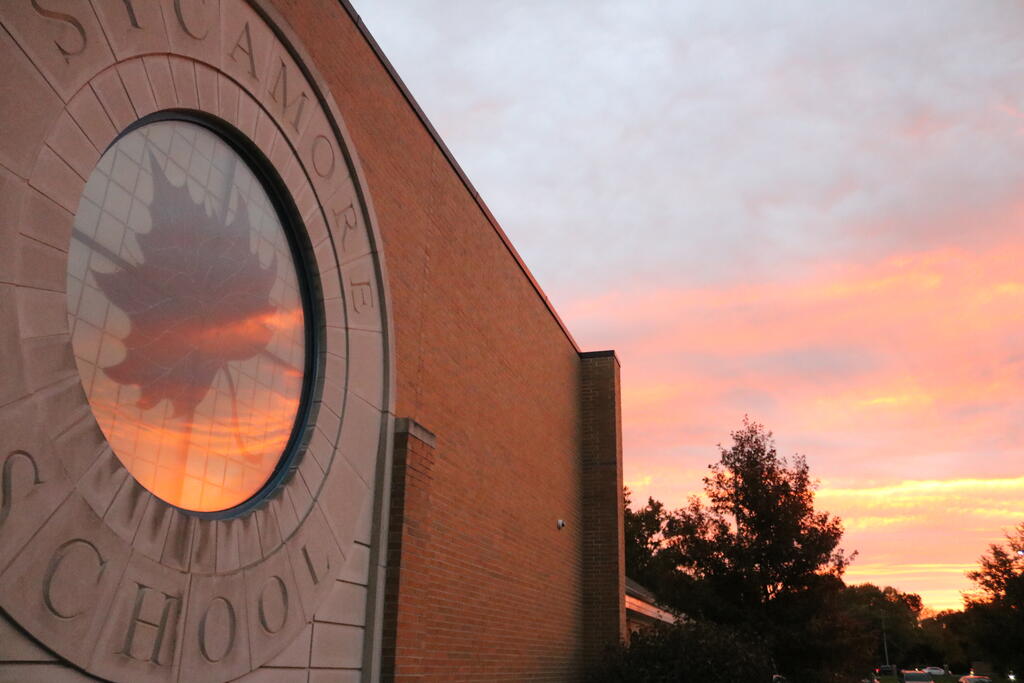
Sycamore School exists so that academically gifted children can experience the enriched, accelerated education they need to reach their potential and to lead responsible, constructive, fulfilling lives.
This site provides information using PDF, visit this link to download the Adobe Acrobat Reader DC software.